LinkedIn Is Slowly Turning Everyone Into the Same Person
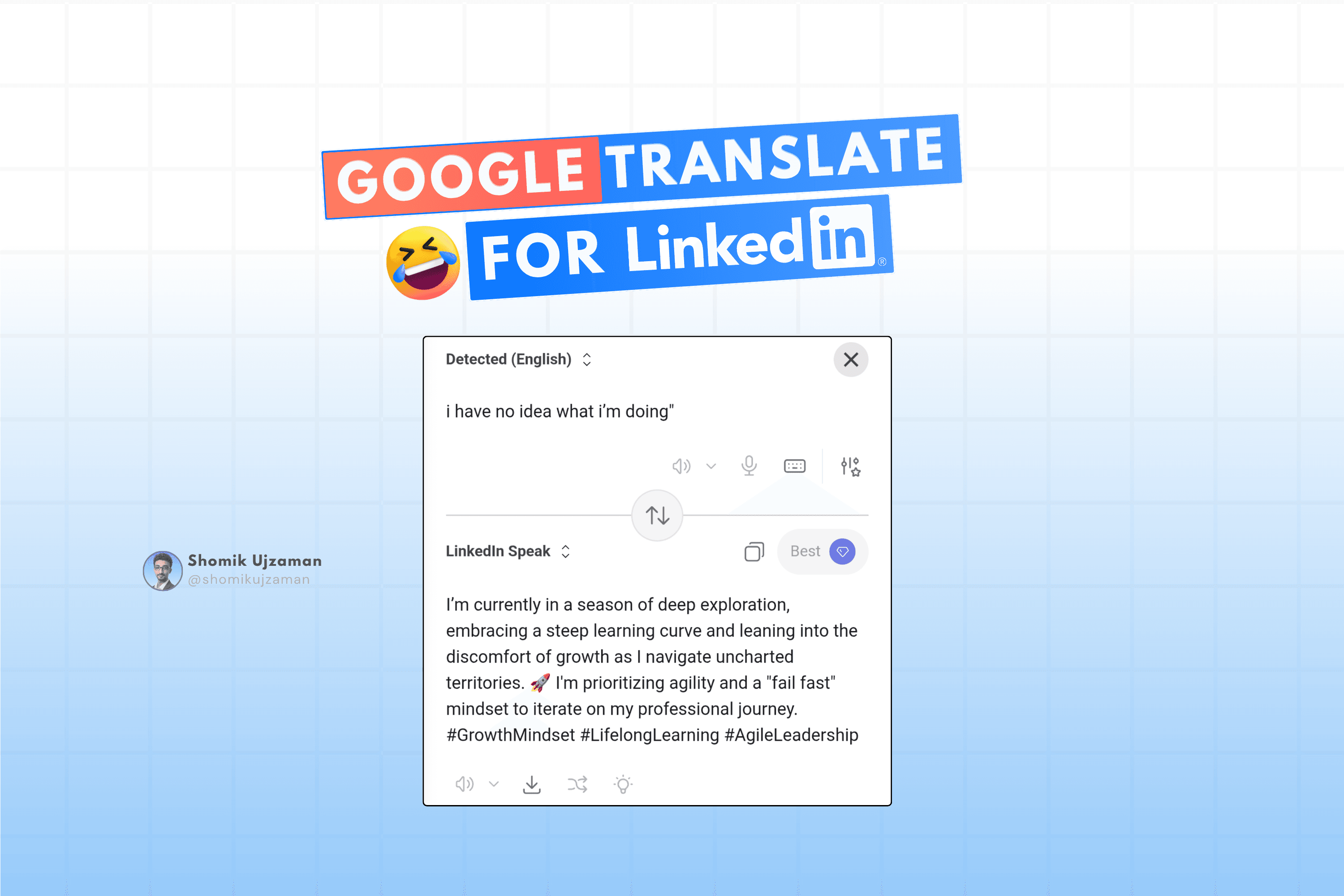
At this point, I am convinced someone built a Google Translate specifically for LinkedIn.
You type one normal sentence, and suddenly it comes back sounding like a keynote speaker at a business conference.
“I messed up” becomes “I gained valuable insights from a challenging experience.”
Relax.
Every platform has its own communication style, and that makes sense. LinkedIn is naturally more professional than Instagram, TikTok, or X. People clean up their thoughts, organize ideas better, and present themselves more carefully.
That part is completely understandable.
But somewhere along the way, professional started becoming performative.
Instead of sounding like real people, many users started sounding like AI-generated motivational posters with corporate buzzwords attached.
The Problem With Over-Polished Content
The issue is not professionalism.
The issue is when personality disappears completely.
Social media works best when people feel like they are interacting with another human being. The reason relatable posts perform so well is because audiences connect with honesty, flaws, humor, and emotional authenticity.
That is why casual storytelling often outperforms perfectly polished corporate writing.
People do not remember the safest post.
They remember the real one.
Why Authenticity Is Winning Again
In recent years, platforms like LinkedIn have shifted from digital resumes to personality-driven platforms.
People are no longer only sharing achievements.
They are sharing opinions, failures, creative processes, lessons, and behind-the-scenes moments.
That shift is changing how personal branding works online.
The creators and professionals building strong audiences today are usually the ones who sound human instead of overly optimized.
A lot of the creative strategy work I explore also focuses on making digital content feel more personal, emotionally engaging, nd culturally relevant rather than robotic or overly corporate. You can explore more creative work on Shomik Ujzaman
Professional Does Not Have To Mean Robotic
There is nothing wrong with writing professionally.
But professionalism should improve communication, not erase personality.
The internet is already full of repetitive content, corporate buzzwords, and recycled motivational advice. The people who stand out are usually the ones willing to sound honest.
Even if that honesty includes saying: “Yeah, I messed up.”
If you want to try the “LinkedIn translator” yourself, check out Kagi Translate and see how your normal sentence suddenly turns into executive-level corporate wisdom.
Final Thoughts
LinkedIn does not need more robotic thought leadership posts.
It needs more people who sound like themselves.
Because at the end of the day, personality builds stronger connections than polished corporate language ever will.