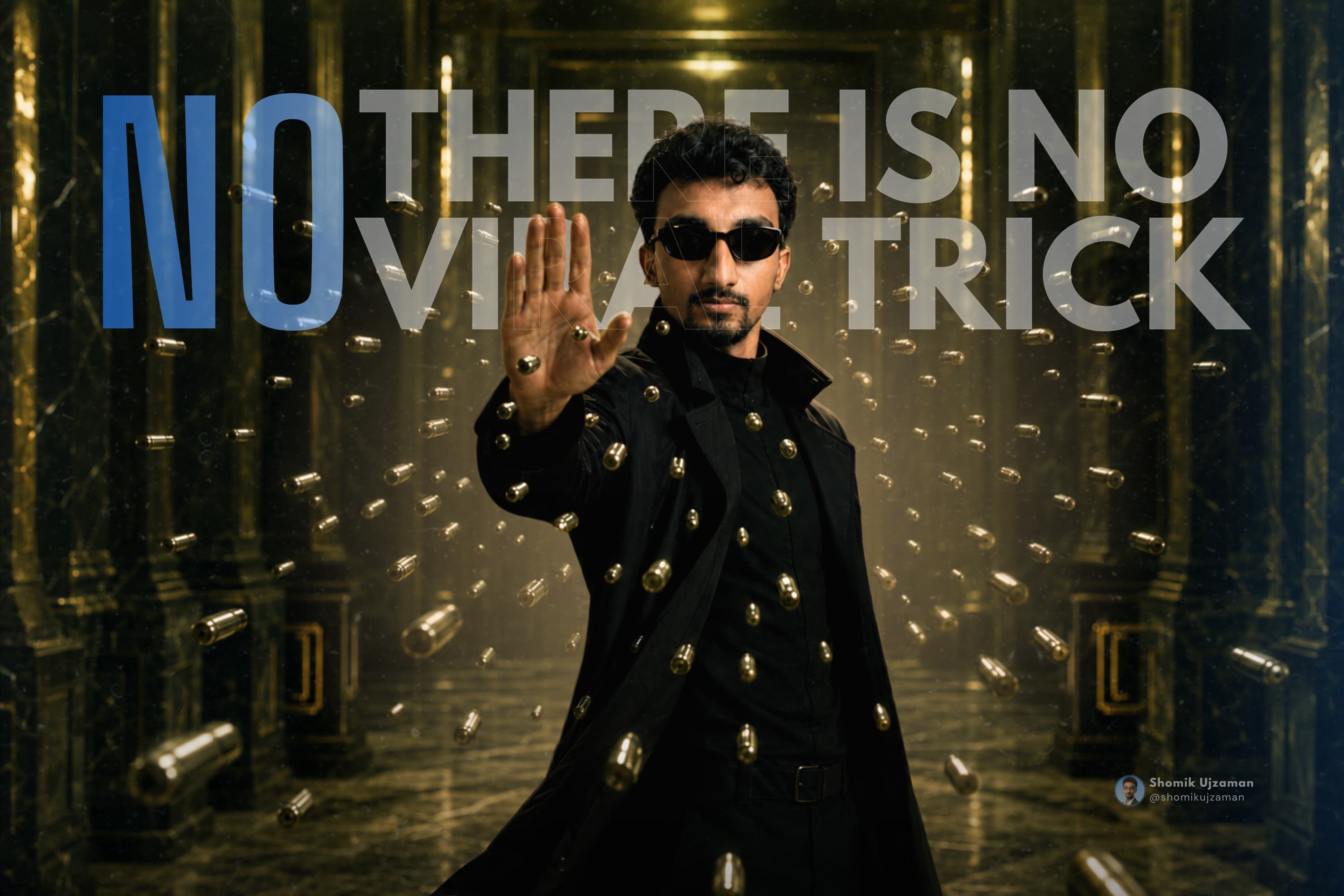
There Is No Cheat Code to Going Viral
Every week, someone discovers the “secret” to going viral.
Again.
“5 steps to make any post go viral.”
“The algorithm does not want you to know this.”
“Use this hook and get one million views.”
At this point, the algorithm apparently has more leaked secrets than a government agency.
One person says you need a controversial hook. Another says you need to post at exactly 8:37 AM. Someone else says you need seven hashtags, trending audio, three emojis, and the phrase:
“I almost did not share this…”
Relax.
Going viral is not a video game. There is no hidden button combination that suddenly unlocks one million views.
Viral Content Is a Reaction, Not a Formula
Content goes viral when it creates a strong enough reaction that people feel the need to share it.
They send it to a friend.
Save it.
Screenshot it.
Tag someone and say:
“Bro, this is literally you.”
That reaction creates momentum.
Not because the creator followed a perfect formula, but because the content reached the right person, with the right emotion, at the right moment.
People Share What Makes Them Feel Something
People rarely share content because it is technically perfect.
They share it because it makes them laugh, think, feel understood, remember something, or see an idea differently.
A strong hook can earn attention. Good design can stop the scroll. Editing can improve watch time.
But emotion gives people a reason to share.
Nobody sends a post to a friend because the typography was perfectly aligned.
They send it because they think:
“You need to see this.”
That small reaction is where virality begins.
Research from Jonah Berger and Katherine Milkman found that emotional responses can influence whether online content is shared. People do not only share information. They share how content makes them feel.
The Algorithm Is Not a Vending Machine
A lot of viral advice treats social media algorithms like vending machines.
Insert one strong hook, add trending audio, post at the “perfect” time, press the button, and receive 500,000 views.
Unfortunately, the internet does not work like that.
You can follow every best practice and still get 400 views.
Then someone records their cat looking confused for six seconds and gets 20 million.
That is the internet.
Algorithms can distribute content.
They cannot force people to care.
Reach Is Not the Same as Connection
A platform might show your content to thousands of people, but visibility does not automatically create trust.
People still decide whether they stop scrolling, continue reading, share the content, or remember the creator.
The algorithm creates an opportunity.
The audience decides what happens next.
Instead of asking:
“How do I make the algorithm push this?”
Ask:
“Why would a real person care about this?”
Good Content Does Not Need to Go Viral
A post does not need one million views to be valuable.
Sometimes a post reaches 500 people and creates one client, one opportunity, one meaningful conversation, or one long-term follower.
That content worked.
Meanwhile, a meme can receive two million views and create nothing beyond temporary attention.
Virality creates visibility.
It does not automatically create trust, authority, community, or business growth.
A viral post might make people notice you once.
Consistent content gives people a reason to remember you.
I explore more ideas around content strategy, branding, and audience connection through my work on Shomik Ujzaman and share more thoughts on LinkedIn.
There is no guaranteed hook, perfect posting time, or secret hashtag combination hidden inside a £99 course.
You can understand your audience, improve your storytelling, and create better content.
But you cannot force people to care.
Stop asking:
“How do I trick the algorithm?”
Start asking:
“Why would someone want to share this?”
Because algorithms distribute content.
People decide what deserves to spread.
If you want to discuss content strategy or build content people genuinely care about, start a conversation.